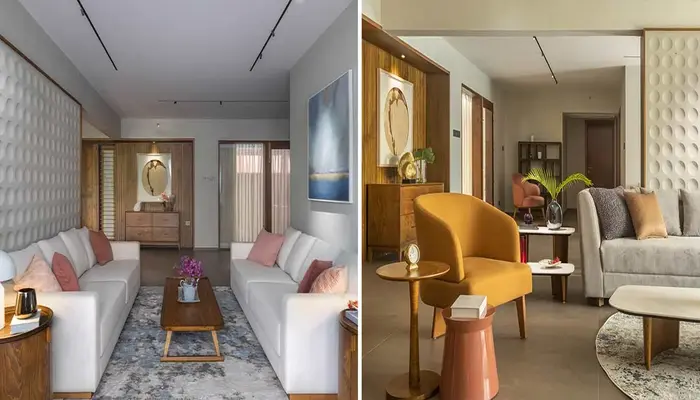
Designing a small apartment isn’t just about making things fit—it’s about creating a space that feels open, balanced, and intentional. As a professional interior design and architecture firm, we’ve helped clients transform tight studios, awkward layouts, and compact homes into stylish sanctuaries.
Whether you’re into modern home decor or looking for rustic interior design tips, avoiding these five common mistakes can make all the difference.
- Mistake: Pushing All the Furniture Against the Walls
Why is it a problem?
Shoving all your furniture to the edges of the room can make the space feel flat and awkward.
Designer fix: Float furniture (like a sofa or reading chair) slightly away from the wall to create zones and improve traffic flow.
“In one of our projects, we floated a small loveseat and added a slim console table behind it. The space instantly felt more intentional.
- Mistake: Using Oversized or Bulky Furniture
Why is it a problem?
Oversized furniture dominates the space, making it feel cramped and less functional.
The designer fix: Choose space-saving, multi-functional pieces—think storage ottomans, nesting tables, or a drop-leaf dining table.
Pro Tip: Use open-base coffee tables or armless accent chairs to maintain visual lightness.
- Mistake: Not Using Vertical Space
Why is it a problem?
In small spaces, every inch counts—especially upward!
Designer fix: Take advantage of your walls. Install floating shelves, use wall-mounted lights, and hang vertical artwork to draw the eye upward and free up floor space.
We added floating shelves above a bed in a studio apartment to store books, display decor, and mount bedside lighting—no nightstands needed.
- Mistake: Relying on a Single Overhead Light / Poor Lighting Choices
Why it’s a problem:
One harsh ceiling light creates shadows and makes the space feel flat.
Designer fixed: Use layered lighting—ambient (general), task (functional), and accent (mood-setting). Floor lamps, sconces, and even under-cabinet lighting make a big difference.
A favorite trick of ours: battery-powered LED puck lights inside shelves for instant style and depth—no wiring required.
- Mistake: Ignoring Color Psychology
Why it’s a problem:
Dark, bold, or clashing colors can visually shrink your space.
The designer fixed Stick to a cohesive, calming palette. Cool tones like light grey, sage green, or powder blue help open up a space. Add contrast with warm accent pieces—cushions, throws, or natural textures.
We once used a light-toned rug and breezy linen drapes to brighten up a small living room—the result was airy, calm, and cohesive.
Final Thoughts: Small Space, Big Style
Whether your vibe is modern minimalism or rustic interior design, smart choices can turn your small apartment into a space that reflects your style and needs.
✨ Remember: Good interior design isn’t about square footage—it’s about smart planning, layered lighting, and personal touches.